MoneySavingExpert: intelligent automation for trading bots with AI guidance
MoneySavingExpert offers a sleek, contemporary interface for shaping automation, monitoring execution details, and managing risk parameters in a single, optimized flow. The design prioritizes quick navigation, precise terminology, and consistent controls that scale from fast configurations to comprehensive rule sets.
Key capabilities designed for disciplined trading workflows
MoneySavingExpert emphasizes transparent configuration, dependable execution controls, and AI-driven guidance that helps organize automated trading setups. Each feature is presented as a practical building block supporting repeatable workflows amid shifting market conditions.
Bot logic templates
Build automation from reusable blueprints that prioritize readable parameters, safe defaults, and consistent naming across strategies.
- Modular building blocks
- Version-aware layouts
- Structured input fields
AI-assisted configuration
Harness AI-driven support to fine-tune parameters, synchronize execution rules, and maintain consistency across multiple bots.
- Guided setup
- Iterative enhancements
- Workflow blueprinting
Execution-ready controls
View order intent, routing preferences, and caps in a single pane optimized for rapid validation and steady operations.
- Guardrail configurations
- Timing settings
- Checklist-style verification
Portfolio-aware organization
Group bots by market, account, or objective, then compare configurations side-by-side for quicker decision-making.
- Structured groupings
- Side-by-side comparisons
- Tag-based filtering
Operational reporting
Digest summaries present changes, activity context, and workflow consistency in an approachable format.
- Readable snapshots
- Action history view
- Swift review flow
Security-minded UX
MoneySavingExpert champions protected session flows and clear permission boundaries to support safe daily use.
- Session visibility
- Access boundaries
- Credential hygiene cues
How MoneySavingExpert workflows come together
The process is presented as a clear sequence that helps organize automated trading bots, define AI-assisted parameters, and review execution context. Each step is designed for readability and consistent control across repeated operations.
1) Define intent
Pick a workflow style and articulate the objective using structured fields to maintain configuration consistency.
- Market focus and routing
- Exposure boundaries
2) Apply AI assistance
Leverage AI guidance to refine parameter sets, align bot logic modules, and keep configurations readable across variants.
- Parameter tuning
- Module alignment
3) Validate and monitor
Confirm guardrails and review a compact operational digest so every run adheres to established patterns.
- Pre-run checklist
- Activity summaries
Operational focus metrics shown as progress indicators
MoneySavingExpert highlights practical operational priorities that support reliable automation workflows. The progress view emphasizes clarity, structured configuration, and risk-aware practices aligned with AI-assisted trading bot management.
Configuration clarity
92%Readable parameter groups help keep bot configurations consistent across iterations.
Risk guardrail coverage
88%Exposure caps and sizing inputs are organized to sustain reliable guardrails.
Workflow modularity
90%Modules enable building bots into repeatable execution patterns.
FAQ with real-time search filtering
This FAQ presents MoneySavingExpert's approach to AI-driven automation, bot configuration, and operational controls. Use the search field to quickly locate topics and review concise answers highlighting functionality and workflows.
Type to filter questions instantly across the list.
How does MoneySavingExpert describe automated trading bots?
MoneySavingExpert portrays automated bots as configurable workflows that structure execution rules, parameters, and monitoring views. The emphasis remains on readable setup and repeatable operational habits.
What does AI-powered assistance help with?
MoneySavingExpert presents AI-powered assistance as a means to refine parameter sets, align workflow modules, and maintain configuration consistency across multiple bot variations.
How are risk controls presented?
MoneySavingExpert highlights exposure boundaries, sizing inputs, and scenario checks in a structured layout to support guardrails during changing market conditions.
Can configurations be compared across workflows?
MoneySavingExpert offers organization tools that group workflows by market or objective and present configurations in a review-friendly format for quick comparison.
How does the interface support fast review?
MoneySavingExpert uses compact summaries, consistent labeling, and checklist-style validation to help confirm key parameters before runs.
What is the main focus of the workflow sequence?
MoneySavingExpert presents a sequence that starts with intent definition, proceeds with AI-assisted configuration, and ends with validation and monitoring using structured summaries.
Automation mindset check-in for consistent performance
MoneySavingExpert offers a brief, interactive check-in designed to align automated trading bots with steady operating habits. The quiz format keeps the focus on decision structure, parameter discipline, and AI-assisted workflow consistency.
Craft a streamlined automation workflow with MoneySavingExpert
MoneySavingExpert brings AI-assisted configuration, modular bot structure, and risk-aware guardrails into a single, readable workflow. Create an account to start organizing parameters and operational reviews with a consistent interface.
Security and operational confidence
MoneySavingExpert emphasizes security-minded UX patterns and clear operational boundaries that support day-to-day workflows. Certification-style marks appear as visual indicators of process focus and structured controls.
Session integrity
Clear session patterns and consistent access cues support confident navigation across sensitive actions.
Access boundaries
Role-aware interactions help keep operational actions organized and review-friendly.
Audit-ready fields
Readable configuration snapshots support consistent review and documented operations.
Credential hygiene
Interface cues emphasize secure handling during authentication and account activities.
Practical risk tips in an expandable accordion
MoneySavingExpert presents risk awareness as a practical, expandable collection of tips aligned with automated trading bots and AI-assisted configuration routines. Each item focuses on structured parameters and repeatable operational habits.
Define exposure boundaries
MoneySavingExpert highlights exposure caps and allocation boundaries as primary inputs, supporting consistent guardrails across workflows and bot variants.
- Set per-workflow exposure caps
- Group limits by market or venue
- Review boundaries in the summary view
Use consistent sizing parameters
Sizing is presented as a structured input set to keep automated trading bots aligned with repeatable operating patterns and readable configuration.
- Standardize units and rounding rules
- Group sizing fields cohesively
- Save presets for quick reuse
Synchronize timing and review cadence
Timing parameters and review cadence are emphasized as part of the operational structure, supporting AI-assisted refinements and consistent bot workflows.
- Define review intervals within the workflow
- Apply a checklist-style validation step
- Keep summaries compact for quick scanning
Document configuration snapshots
Configuration snapshots are presented as a practical method to compare bot iterations and preserve consistent context across changes.
- Capture parameter groups per iteration
- Use tags for quick organization
- Review snapshots before adjustments
Disclaimer
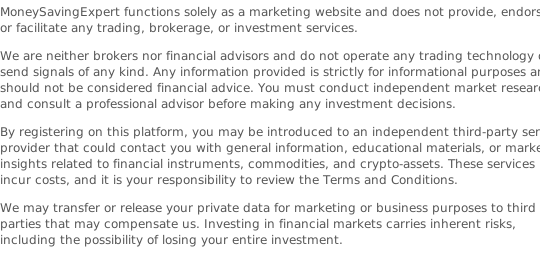
This website functions solely as a marketing platform and does not provide, endorse, or facilitate any trading, brokerage, or investment services.
Read More